
Bathroom Fixture Upgrades in Easton: Will a New Faucet Fit Your Existing Sink?
A practical guide to matching a replacement bathroom faucet with an existing sink, countertop and drain, while separating visible checks from details needing confirmation.
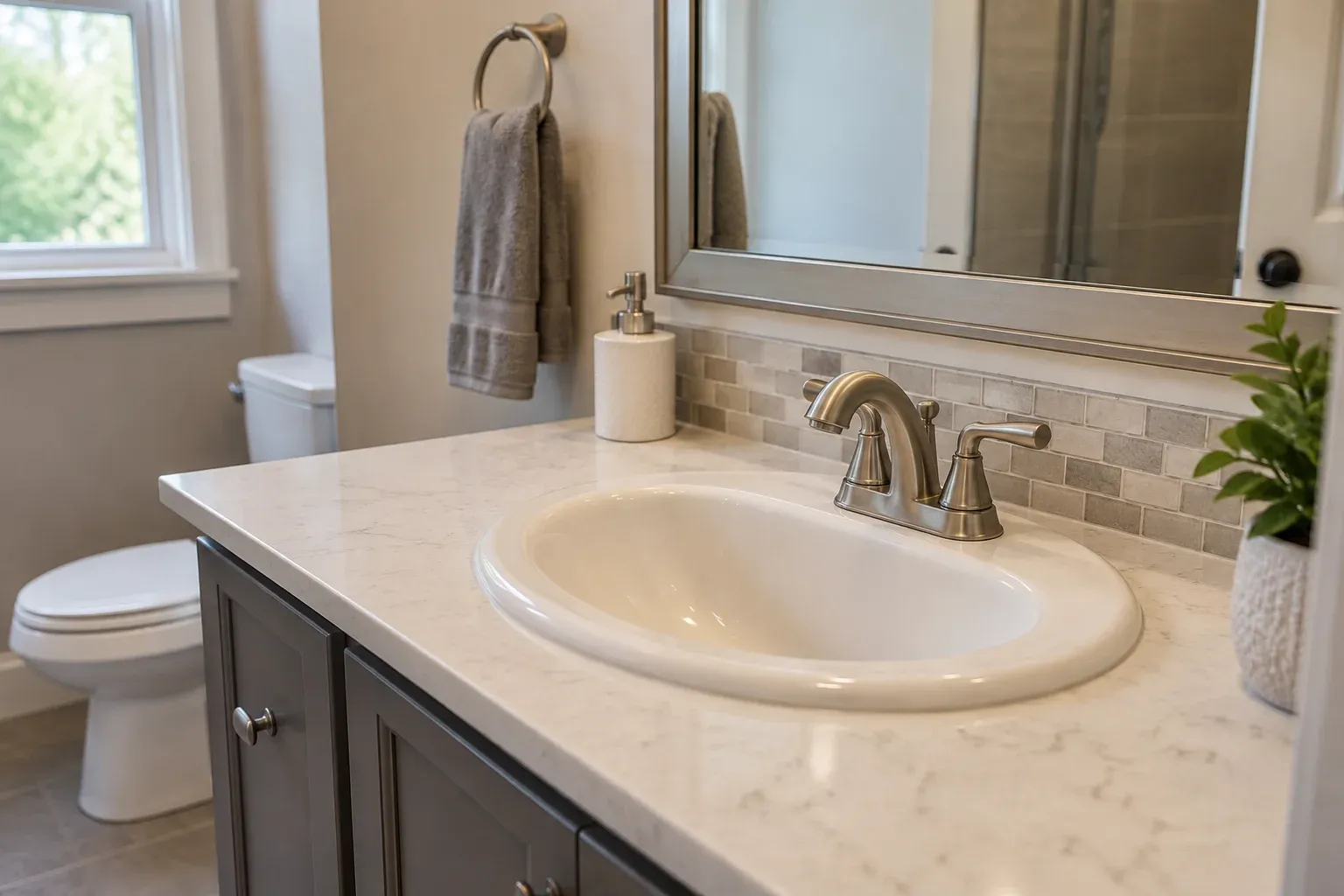
Start With the Sink You Plan to Keep
Bathroom fixture upgrades in Easton often start with a straightforward question: can a new faucet work with the sink and countertop already in place? Matching the finish is only one part of the decision. The replacement also needs a suitable mounting arrangement, usable spout position, room for its handles and a compatible drain setup.
Begin with a record of the existing bathroom rather than a shopping cart. Photographs and accessible measurements can narrow the choices, but they cannot reveal everything beneath a faucet base. Separate what you can see from what needs a manufacturer’s drawing or professional confirmation. That distinction helps prevent a promising model from becoming an unsuitable purchase.
Confirm the Mounting Arrangement Before Comparing Finishes
Look at where the bathroom faucet mounts: through the sink’s rear deck, through the countertop or through the wall. These arrangements are not interchangeable without broader changes. For a deck-mounted replacement, record the apparent number of openings and the spacing between separate faucet components. A centerset faucet usually combines the spout and handles on one base; a widespread model has separate components.
Treat the visible base as a clue, not proof of the hole pattern. A broad plate may conceal unused openings. Do not loosen fixtures simply to investigate. Instead, look for the sink’s model information, existing paperwork or an accessible view from inside the vanity. If the openings remain uncertain, label their number, diameter and spacing as unconfirmed before comparing replacement models.
Read each candidate’s mounting drawing for permitted hole sizes, spacing and maximum deck thickness. Compare its base or optional deck plate with the flat surface available around the openings. A plate must cover unused holes without extending onto a curved basin edge or conflicting with the backsplash. Countertop thickness alone may not represent the full mounting depth where additional material sits underneath. Wall-mounted bathroom faucets require separate confirmation of concealed valve compatibility and outlet positioning; their appearance does not establish that an existing setup will accept them.
Judge Spout Reach and Handle Clearance Together
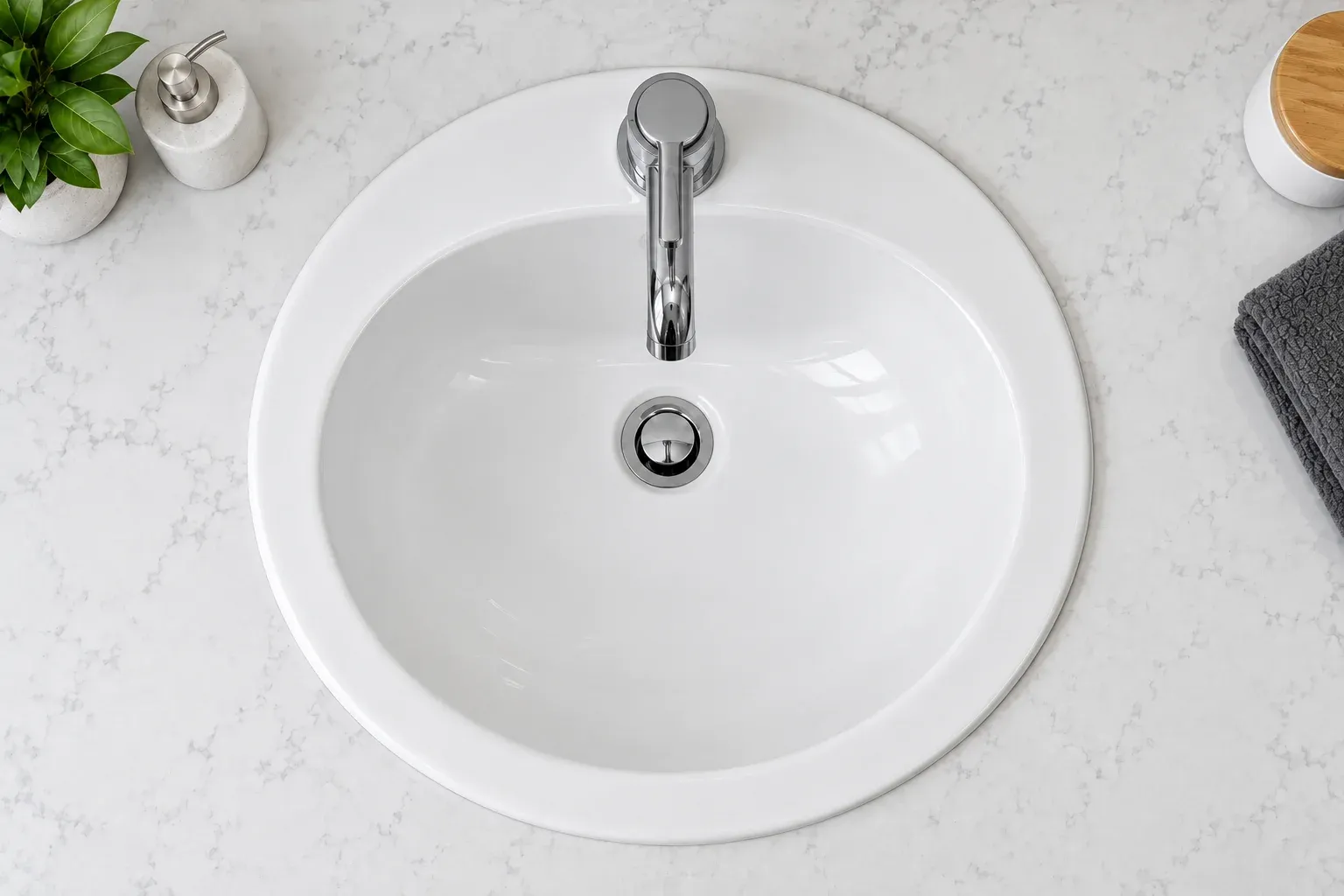
Spout reach describes how far the outlet extends toward the basin, but manufacturers may use different reference points in their drawings. Compare the stated dimension with the drawing itself. Then consider where the outlet would sit over your bathroom sink. A short projection can leave hands crowded against the back wall of the bowl; an excessive projection can place the stream awkwardly close to the front.
Do not judge reach by drain alignment alone. Basin slope, depth, outlet angle and stream characteristics also affect everyday use and splashing. An overhead photograph helps document the current relationship between spout and bowl. If the existing arrangement is comfortable, its dimensions provide a useful reference, not a guarantee. For a vessel basin, compare outlet height with the rim and usable washing space rather than choosing a tall faucet by appearance.
Check the full movement of each handle against the backsplash, mirror cabinet and nearby accessories. A handle that clears when closed may strike something when fully open. Think about cleaning behind the faucet and reaching the controls with wet hands. In a shared household bathroom, consider whether everyone can operate the proposed controls comfortably. Product drawings can identify likely conflicts; questions about actual reach or operation deserve confirmation before purchase.
Check the Drain and Included Components Separately
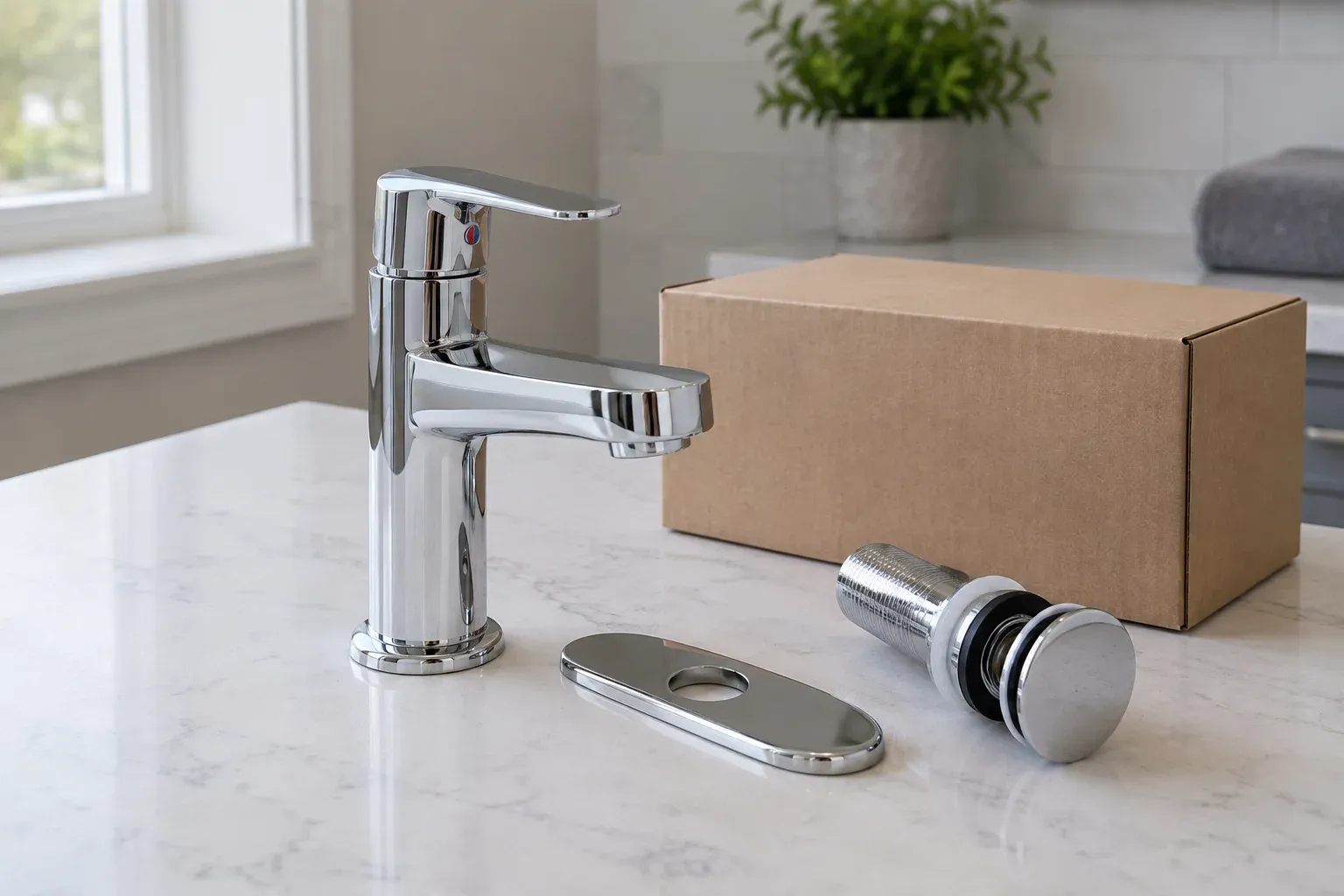
A faucet and its matching drain are separate compatibility decisions. Some bathroom faucets include a drain assembly; others do not. An included drain still needs to suit the existing basin. Identify whether the sink has an overflow opening, then check the drain manufacturer’s stated application. Drains intended for overflow and non-overflow basins are not automatically interchangeable, even when their visible caps look alike.
Note how the current stopper operates. A lift-rod arrangement uses a control near the faucet and linkage below the sink, while a push-button stopper operates at the drain itself. Changing faucet styles can affect whether the existing stopper control remains usable. If you intend to keep the drain, ask whether it can operate independently of the replacement faucet rather than assuming a matching finish establishes compatibility.
Inside the bathroom vanity, accessible photographs can show drawer positions, shelves and the general drain arrangement. They do not confirm connection sizes, seal condition or whether a replacement drain will align with existing piping. Have uncertain dimensions and connections checked by a qualified professional. Also compare the package contents with the manufacturer’s parts list: supply connections, mounting components and drain parts may vary between otherwise similar models. Do not assume every pictured accessory is included.
Use Product Documentation to Build a Defensible Shortlist
Build a shortlist of two or three bathroom faucets using exact model numbers, including any finish or package suffix. Save the dimensional drawing, specification sheet, component list and care guidance for each. Retail photographs are useful for appearance, but manufacturer documents should resolve mounting and clearance questions. When two documents appear inconsistent, request clarification rather than selecting the more convenient measurement.
For efficiency, EPA’s bathroom faucet guidance explains that WaterSense labeled models are independently certified for water efficiency and performance. That label does not establish physical compatibility with your sink. Apply the same mounting, reach and drain checks to labeled products. For landlords or hospitality operators planning private bathroom replacements, distinguish those settings from shared public restrooms; EPA’s guidance separates private lavatory faucets from public-use fixtures.
Use the WaterSense product search to check a candidate’s listing rather than relying only on a retailer’s badge. Then keep a brief decision record: confirmed fit details, unresolved questions and any separately required components. Ask the seller about return conditions before ordering, particularly when hidden dimensions remain unknown. If professional confirmation is needed, provide the sink photographs and exact product documents together. A clear question such as “Does this mounting shank accommodate the existing deck thickness?” is more useful than asking whether a faucet generally looks suitable. Resolve those questions before committing to a model.
- Confirm the mounting pattern and permitted deck thickness.
- Compare spout dimensions and full handle movement.
- Verify drain requirements and package contents.
- Keep unresolved questions beside the exact model number.
Related Renovation Planning Articles
For a separate renovation project, Comparing Basement Remodeling Quotes in Easton: What Is Actually Included? addresses how to evaluate the scope behind competing proposals.
Basement Finishing in Easton: Open Layout, Separate Rooms, or Both? considers room arrangement decisions for readers planning that different part of the home.
Choose a Confirmed Fit, Not Just a Coordinated Finish
A replacement faucet is a stronger choice when the evidence supports it, not merely when the finish coordinates. Keep the existing sink’s mounting arrangement, basin geometry and drain requirements at the center of the decision. Use visible observations to narrow options and manufacturer documentation to test them. Where information remains hidden or ambiguous, seek professional confirmation rather than guessing. This approach can also reveal when a faucet-only change is less straightforward than expected. For bathroom fixture upgrades in Easton, the practical goal is a documented match: a faucet that fits the retained bathroom fixtures and works comfortably in daily use.
Frequently asked questions
Can a single-hole bathroom faucet replace a three-hole faucet?
Sometimes. The manufacturer must approve the mounting arrangement, and a compatible deck plate must cover the unused openings while fitting the sink’s available mounting surface. Hidden hole dimensions and countertop thickness may need professional confirmation.
Does a replacement bathroom faucet need to include a new drain?
Not necessarily. Confirm whether the existing drain can remain and whether its stopper operates independently of the faucet. If a replacement drain is supplied, check its compatibility with the basin’s overflow design, drain opening and under-sink connections.
Does the WaterSense label mean a faucet will fit my sink?
No. WaterSense addresses water efficiency and performance, not mounting dimensions or basin compatibility. Compare the exact model’s dimensional drawing, mounting requirements and drain information separately.