
Cabinet Replacement in Easton: Plan Storage Before Choosing Cabinet Sizes
Turn everyday cookware, dishes, and pantry items into a practical cabinet storage plan before choosing sizes, drawers, shelves, and pullouts.
Turn daily frustrations into storage requirements
Cabinet replacement in Easton should begin with what your kitchen needs to hold, not a catalog of door styles. A cabinet can look generous on a drawing yet leave your largest skillet without a home. Before selecting widths or interior accessories, build a storage plan around the belongings you actually use. The goal is to give those items accessible places without filling every opening with specialized hardware.
Start with specific frustrations: lifting three pans to reach one, storing glasses behind other glasses, or leaving the mixer on the counter because moving it is difficult. Translate each complaint into a requirement, such as separate lid storage or an accessible shelf for heavy equipment. Identify what already works, too. A plain adjustable shelf may deserve to stay in the plan. Easton rental-property owners can use the same approach, while allowing flexible storage for different occupants rather than fitting every compartment to one household.
Inventory what stays and measure awkward pieces
Inventory the kitchen in manageable groups: cooking equipment, dishes, food containers, pantry goods, small appliances, and cleaning supplies. Separate what stays from duplicates, damaged pieces, and items stored elsewhere. Count realistic working quantities rather than assuming everything needs more space. Record how often each group gets used. Weekday breakfast bowls need easier access than a serving platter brought out twice a year, even when the platter occupies more room.
Measure the pieces most likely to dictate cabinet interiors. For a skillet, include its handle; for a food processor, include the lid or feed tube if it will remain assembled. Measure stacks as stored, not just individual plates. Note width, depth, and height, plus room to grasp and remove each item. A pot that barely clears an opening may still be awkward to lift out. Record heavy items separately so their proposed shelf or drawer can be checked against the selected product's load rating.
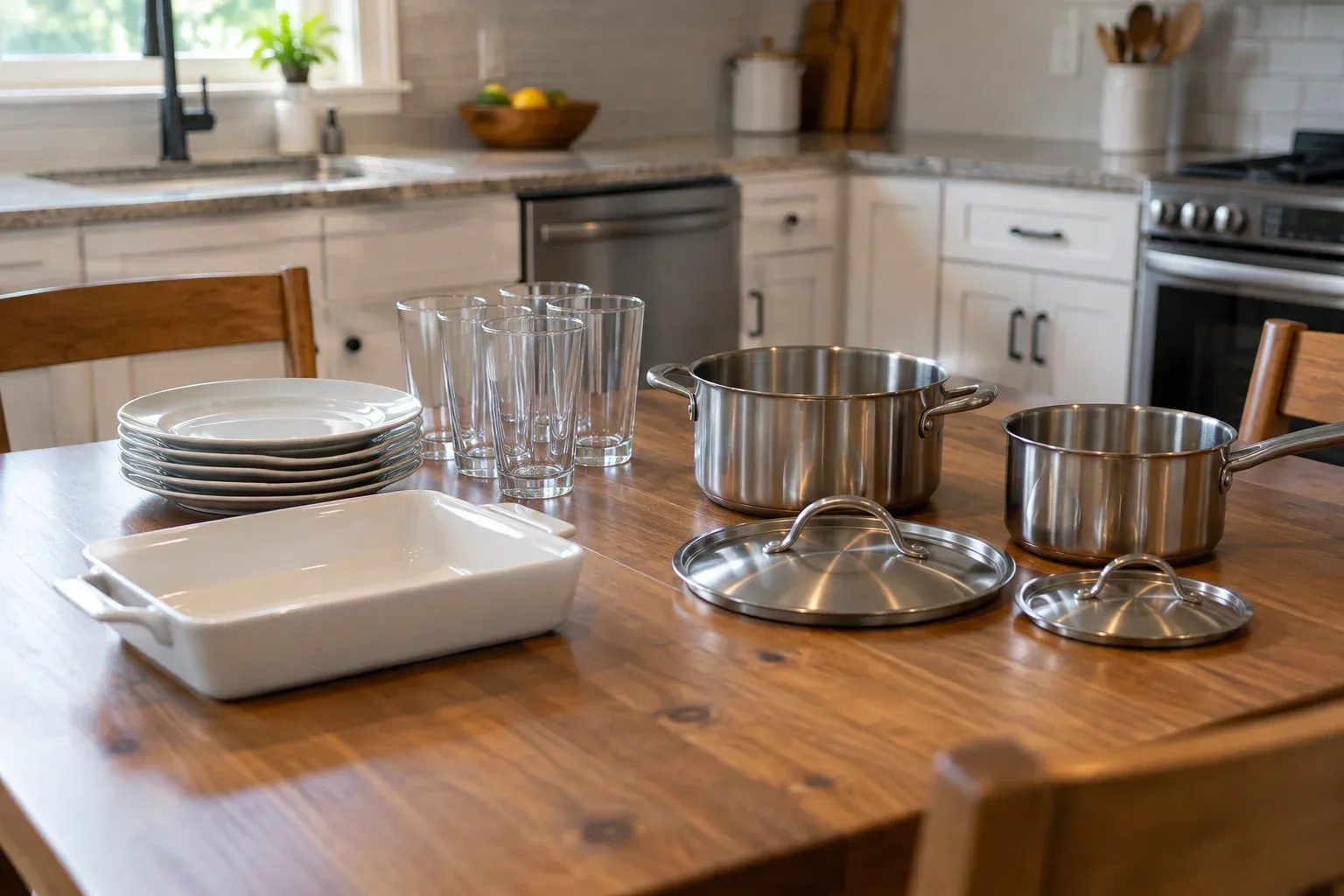
Test awkward groups on a table using painter's tape to outline a possible storage footprint. Arrange nesting bowls, lids, or containers as you intend to keep them. This reveals whether a tidy-looking stack requires too much rearranging. Photograph the arrangement and keep its measurements beside your inventory. Leave reasonable space for ordinary grocery fluctuations, but do not reserve entire cabinets for hypothetical purchases without a clear reason.
Match belongings to drawers, shelves, and dividers
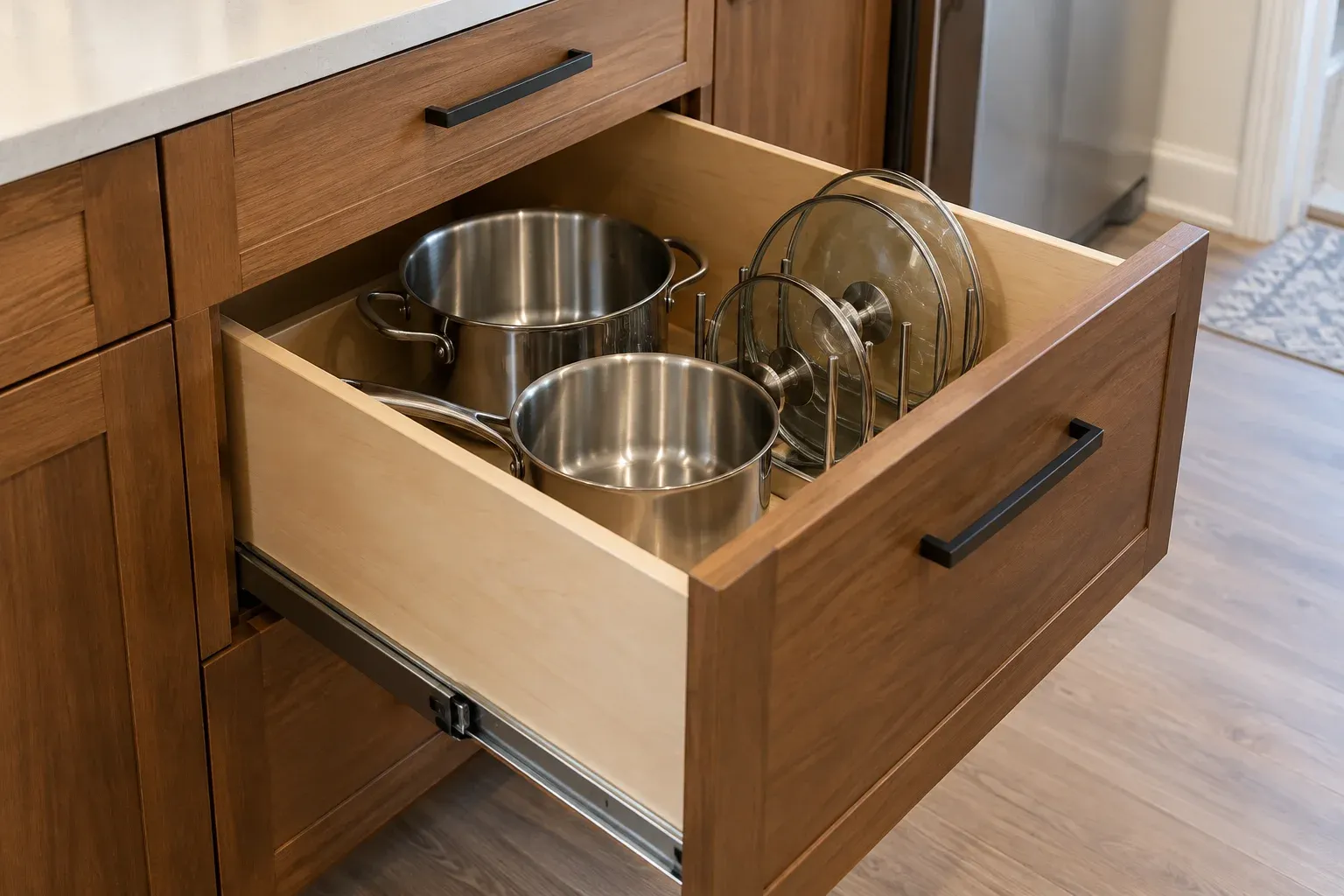
Choose drawers when seeing and reaching contents from above solves a real problem. Deep drawers can suit pots, mixing bowls, or food containers, provided their usable dimensions and load ratings match the contents. Shallower drawers can keep utensils and preparation tools from becoming a tangled pile. Do not assume a deep drawer should contain several layers: if removing the upper layer is necessary every day, the arrangement recreates the access problem you wanted to fix.
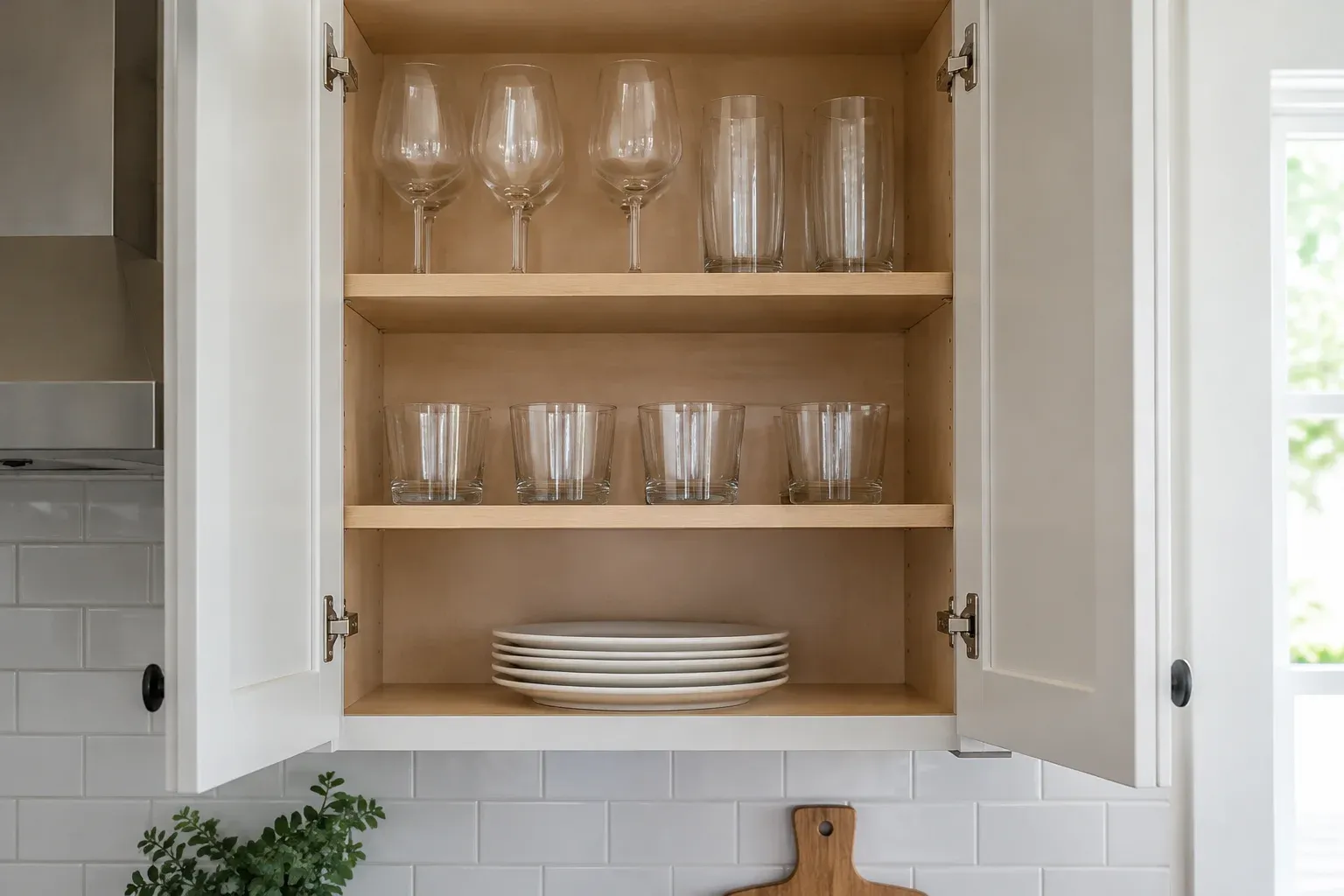
Shelves remain useful for items that stand securely and are easy to identify from the front. Adjustable shelves can accommodate changing glassware or pantry packages without committing to a fixed organizer. Check the tallest glass and the height of stacked dishes, then allow enough clearance to lift them comfortably. Avoid stacking heavy dishes so high that taking down the top piece becomes awkward. Put frequently handled items within a comfortable reach for the people using the kitchen.
Assign narrow or unusually shaped pieces deliberately. Baking sheets may work upright with dividers if the opening is tall enough; large platters may need a broader shelf. Lids need their own measured space rather than whatever remains after pots are assigned. For each group, ask two questions: does it fit, and can someone retrieve it without unloading neighboring items? A storage plan succeeds only when both answers are yes. Keep frequently used companions together when practical, such as containers and matching lids.
Make pullouts earn their space
Evaluate pullouts by accessible capacity, not by the impression that moving hardware always creates storage. Slides, frames, baskets, and mounting clearances occupy space. A pullout may make the back of a cabinet easier to reach while reducing the width available for a large appliance. Compare the actual tray dimensions with your measured belongings, and check whether its sides interfere with handles or wide dishes. Ask for product-specific interior measurements rather than relying on the cabinet's outside width.
Prioritize features that remove a frequent difficulty. A pullout used several times daily may be more valuable than an elaborate organizer for occasional cookware. Conversely, a simple shelf may hold bulky supplies more efficiently. Check the steps involved: opening a door, extending a tray, and moving another item can still be cumbersome. Consider cleaning access and whether an organizer can be adjusted or removed as needs change. Keep the first version of the plan simple, adding specialty interiors only where the inventory shows a clear benefit.
Check the cabinet schedule against actual belongings
A cabinet schedule is the itemized list of cabinets proposed for the project. Give each cabinet a matching inventory assignment: everyday dishes, pans and lids, breakfast supplies, or another specific group. Check drawer counts, shelf quantities, door arrangements, and accessories against that assignment. Unassigned belongings expose gaps; several nearly empty cabinets may indicate unnecessary subdivisions. Review the actual product specifications because nominal cabinet dimensions do not describe the clear opening or finished drawer interior.
Run through an ordinary day using the schedule. Where will cereal bowls go after washing? Can you remove the stockpot without shifting a shelf? Where do groceries land when pantry storage is full? Verify that doors and drawers can open sufficiently to use the chosen interiors, especially beside appliances or projecting hardware. Keep unresolved dimensions and compatibility questions on a written checklist. Settle them before ordering rather than assuming an accessory can be added later without changing usable space.
Related reading
For other remodeling topics, see these separate guides: Bathroom Remodeling in Easton: Planning a Shared Bathroom for Busy Mornings; Bathroom Fixture Upgrades in Easton: Will a New Faucet Fit Your Existing Sink?; Comparing Basement Remodeling Quotes in Easton: What Is Actually Included?; and Basement Finishing in Easton: Open Layout, Separate Rooms, or Both?
Let the storage plan guide the cabinet choices
The strongest starting point for cabinet replacement in Easton is a measured inventory paired with a checked cabinet schedule. Choose cabinet sizes and interiors after identifying what must fit, how often it is used, and how it will be retrieved. That sequence keeps decisions grounded in everyday needs rather than attractive accessories, and gives you a concrete way to review the plan before committing to an order.
Frequently asked questions
Should I choose cabinet sizes before sorting my kitchen belongings?
Inventory what will stay first. Measure awkward pieces and group everyday items by use, then compare those needs with the usable dimensions of proposed cabinets.
Do pullouts always provide more storage than shelves?
No. Pullouts can improve access, but their frames and hardware occupy space. Compare the actual tray dimensions and retrieval benefits with a fixed or adjustable shelf.
What should a cabinet schedule show for storage planning?
It should identify each cabinet and its dimensions, drawer or door arrangement, shelves, accessories, and relevant clearances. Assign actual belongings to each cabinet and verify interior dimensions before ordering.