
Family Room Remodeling in Easton: Reduce TV Glare Without Darkening the Room
Keep daylight without putting up with distracting screen reflections. Learn how to test TV placement, shades, finishes and lighting before committing to a layout.
Start With the Reflection, Not a Darker Room
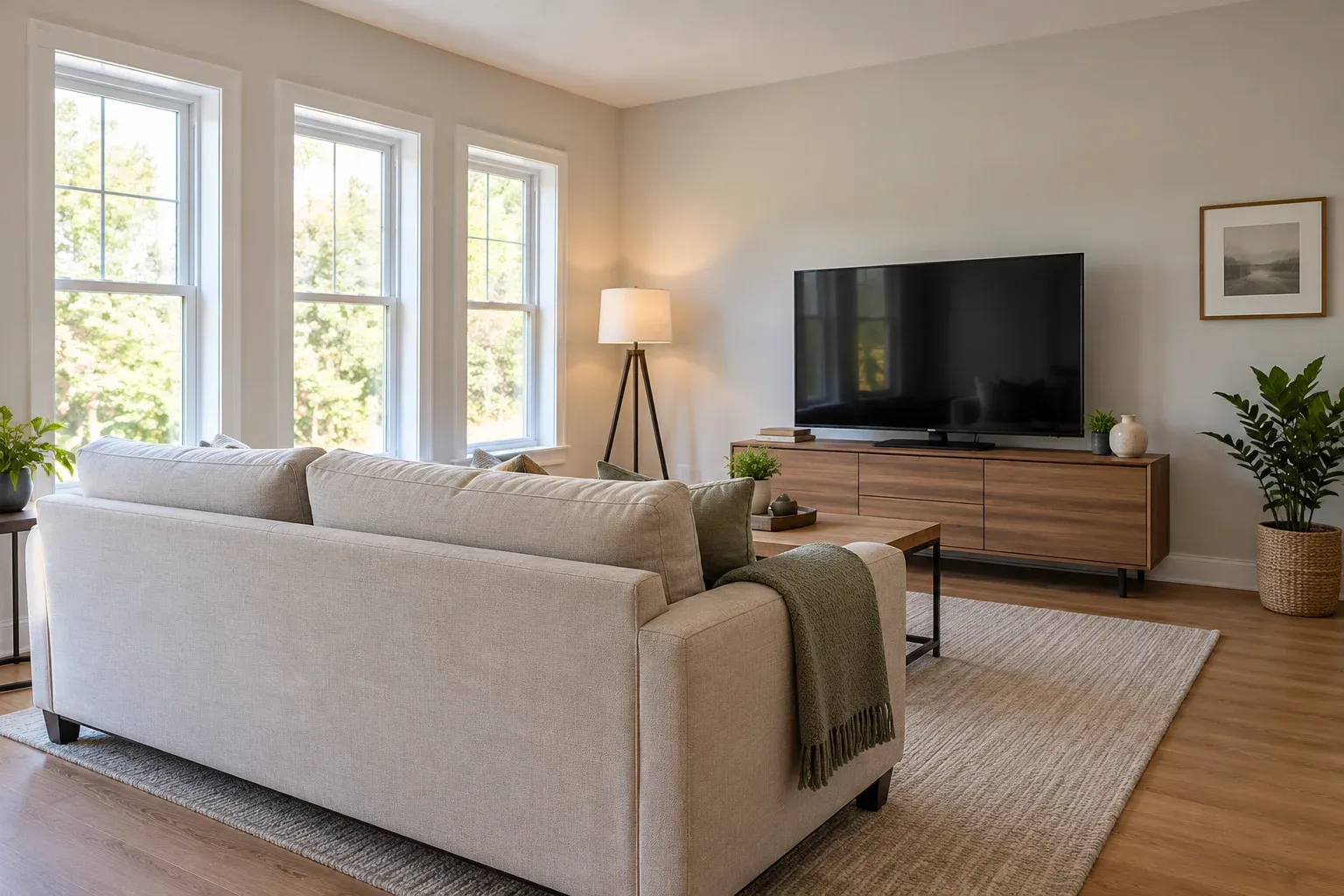
Family room remodeling in Easton can make television viewing more comfortable without turning a bright gathering space into a dark theater. The practical goal is to control light that reaches the screen or reflects toward viewers while preserving useful daylight elsewhere. Start with the room’s actual viewing habits: a weekend afternoon game creates different challenges from evening movies, and a chair near a window may have a different reflection problem than the sofa.
Treat Family room remodeling as a coordinated layout decision rather than a search for one glare-proof product. Screen position, seating, window coverings, surface sheen and lamp placement all affect the result. Before choosing built-ins or moving electrical outlets, identify which light source causes the distraction. A reflected window needs a different response from a bare bulb behind the viewer, and neither problem automatically calls for darker walls or permanently covered glass.
Map Glare at the Times You Actually Watch
Check the television from every regularly used seat in the morning, afternoon and evening. With the screen off, look for recognizable windows, lamps and bright doorways reflected in its surface. Then watch familiar content, including a darker scene, to judge whether those reflections interfere. Note the time, seat and light source. A few observations over several days are more useful than choosing a wall during one brief visit to the room.
Also record what other people need while the television is on. Someone reading, playing a board game or walking through should not have to accept darkness for another person’s screen. The activity-zoning question explored in open versus separate room layouts is useful here: identify where activities overlap, then decide whether furniture placement and independent lighting can separate them. A full partition is not the default answer to competing light needs.
Test Screen Placement Before Committing to Built-Ins
A wall perpendicular to the main windows is often a sensible starting point because the glass is less likely to sit directly behind viewers. It is not a guarantee: corner windows and other bright openings can still appear on the screen. Test candidate positions using an existing television on stable, manufacturer-appropriate furniture. Tape can mark a proposed screen outline, but it cannot show how the actual screen will reflect light.
Check walking routes before settling on the clearest picture. Keep access to exterior doors comfortable, especially where the family room opens onto a deck; planning furniture and walking routes first matters on both sides of that doorway. Once the viewing position works, inventory consoles, games and cables before sizing cabinetry. The same storage-first principle described in planning storage before cabinet sizes helps keep media storage from dictating an untested television location.
Use Adjustable Shades to Preserve Useful Daylight
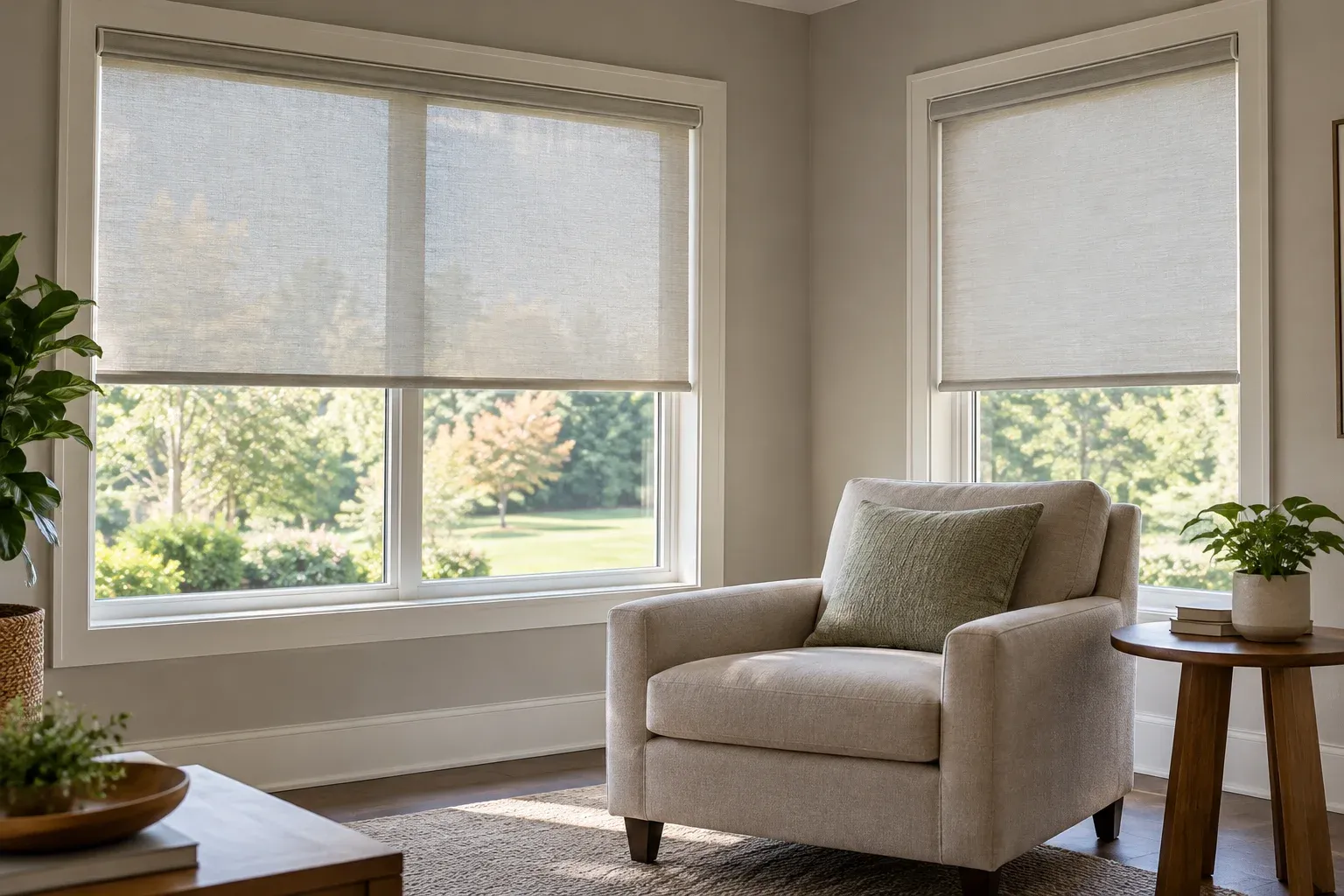
Choose window treatments that can respond to changing conditions instead of assuming every window needs full blackout coverage. Light-filtering shades may soften a bright window while keeping the room usable during the day. Adjustable blinds can redirect some incoming light, although gaps may still admit distracting sun. Where direct sunlight reaches the screen, stronger light control may be necessary during that period, even if a lighter treatment works at other times.
Evaluate fabric samples in the actual window and from the viewing seats. A material that looks pleasantly translucent in a sample book may still appear as a bright rectangle reflected in the television. Consider controlling windows individually so one troublesome opening can be shaded while another supplies daylight. Check shade access around furniture and select child-safe operating arrangements where relevant. Window treatments manage incoming light; they do not correct reflections from poorly positioned indoor lamps.
Limit Reflective Finishes Near the Screen
Highly polished tables, glossy cabinet fronts and large mirrors can redirect bright light into the viewing area. Lower-sheen finishes near the television generally create less conspicuous surface reflections, but they cannot eliminate a window reflected directly in the screen. Review finish samples beside the proposed television wall in daylight and under lamps. Pay particular attention to horizontal surfaces below the screen, where a bright highlight can remain distracting even without appearing on the display.
There is no need to make every surface dark. A restrained mix of matte painted walls, fabric upholstery and less reflective furniture can support a bright room without adding unnecessary sparkle around the picture. Choose paint sheen with cleaning needs in mind as well as appearance. If a mirror is important to the room, test its position before fixing it permanently so it does not redirect a sunny window toward the screen or seating.
Separate Ambient Light From Screen-Facing Light
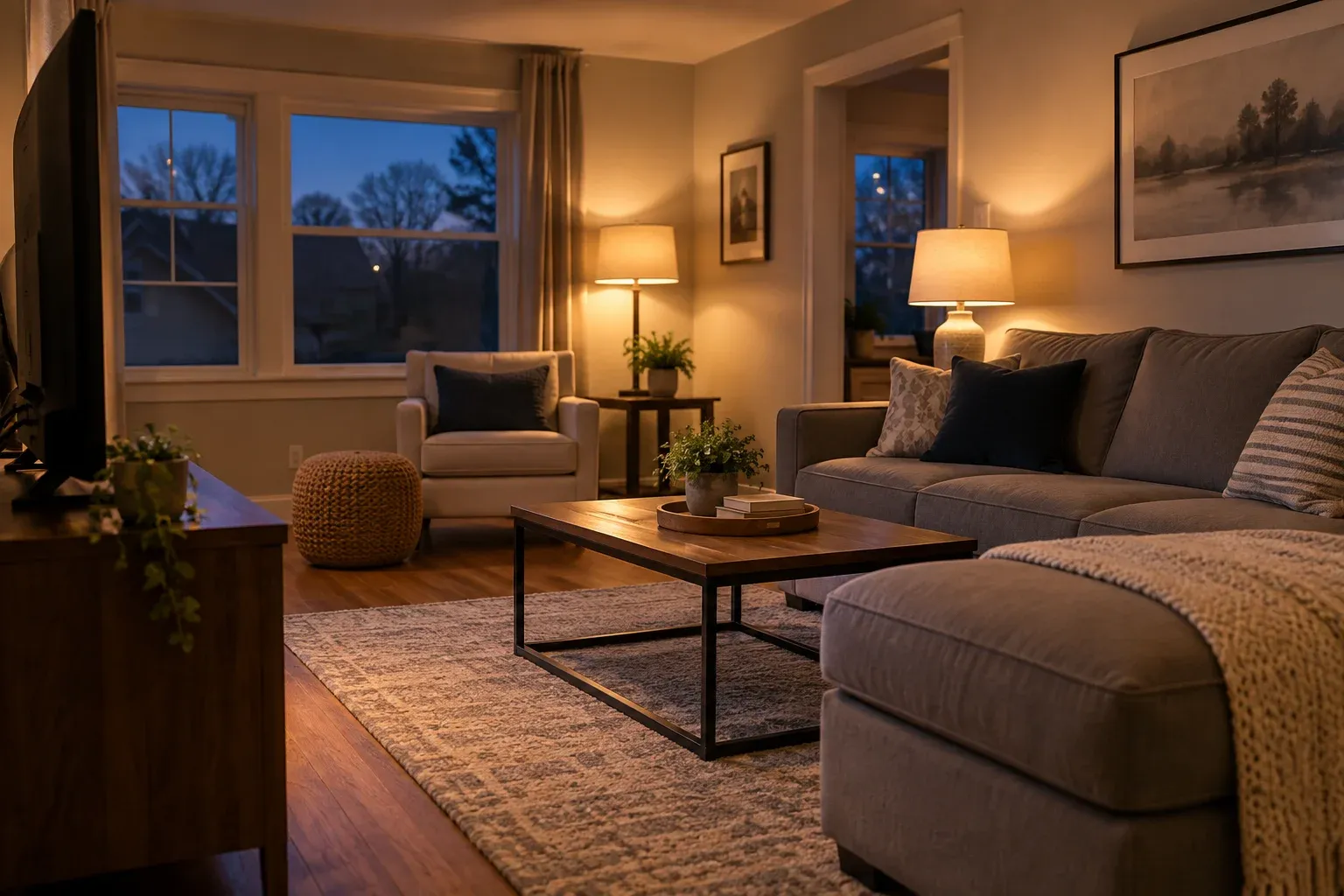
Separate general room lighting from lights needed for reading or other close work. Shaded lamps beside seating can provide useful light without exposing a bright bulb behind viewers. However, placement still needs testing from each seat: a lamp that disappears from one viewing angle may reflect clearly from another. Avoid aiming adjustable fixtures at the television. Where new wiring or controls are proposed, have a qualified electrician address the electrical work.
Plan independently controlled lighting groups so the whole room does not depend on one overhead setting. Dimming compatible fixtures can help balance evening comfort, but a dim reflected bulb may still be distracting. At dusk, repeat the seating checks with the intended lamps on and shades in their usual positions. Keep enough light for safe circulation and other activities. The goal is a comfortable balance around the television, not the lowest possible light level.
Put Tested Choices Into the Remodeling Scope
Turn successful tests into a written scope: screen location, seating positions, shade operation, finish sheen, fixture locations and control groups. When reviewing proposals, distinguish cabinetry, electrical work, painting and window treatments rather than assuming they come together. The scope-checking approach in comparing remodeling quotes can help organize those questions. For rental owners or commercial property managers adapting a residential-style lounge, deciding who supplies what is also useful for clarifying responsibility for televisions, mounts, shades and installation.
For family room remodeling in Easton, make permanent decisions after checking daylight and evening conditions, not before. Start with reversible changes, confirm which ones improve the actual viewing seats, and carry those findings into the layout. Screen placement addresses reflection angles; shades control window light; finish choices reduce surrounding highlights; and lighting design supports other activities. Keeping those jobs distinct makes it easier to retain a welcoming room while reducing the glare that interrupts television viewing.
Frequently asked questions
Does the television always need to be perpendicular to the windows?
No. A perpendicular wall is a useful starting point, but window direction, neighboring openings and seating positions affect reflections. Test the actual screen from each regularly used seat at your usual viewing times before choosing its permanent location.
Are blackout shades necessary to reduce daytime TV glare?
Not always. Adjustable light-filtering shades may soften bright window reflections while retaining daylight. Direct sunlight or particularly distracting reflections may require stronger light control at certain times. Test a suitable fabric sample rather than choosing by appearance alone.
Will matte paint eliminate television glare?
No. Lower-sheen paint can reduce reflections from the painted surface, but it does not remove a window or lamp reflected in the television. Screen placement, adjustable window treatments and lighting positions address those sources more directly.